Benchmade 940 Vs Bugout: Ultimate Lightweight Knife Showdown
Choosing the right everyday carry knife can be tough, especially when you’re deciding between two top contenders like the Benchmade 940 and the Bugout. Both knives are popular for good reasons, but which one truly fits your needs?
If you want a knife that feels just right in your hand, performs reliably, and lasts for years, you need to know the key differences. You’ll discover what sets these knives apart and which one could become your go-to tool.
Keep reading—your perfect knife might be closer than you think.

Credit: www.benchreviews.com
Design And Build
The design and build of a knife affect its use and feel. Benchmade 940 and Bugout are popular choices. Both knives offer strong features but differ in design and materials. Understanding these differences helps in choosing the right knife.
Each knife targets users who want quality and durability. They suit outdoor activities, daily use, and collection. The following sections explore their blade materials, handle construction, and weight.
Blade Materials
The Benchmade 940 uses premium S30V stainless steel. This steel holds sharpness well and resists corrosion. It offers a good balance of toughness and edge retention.
The Bugout features CPM-S30V steel too, known for its strength. Both blades perform well in cutting tasks. They require regular care to keep sharpness and prevent rust.
Handle Construction
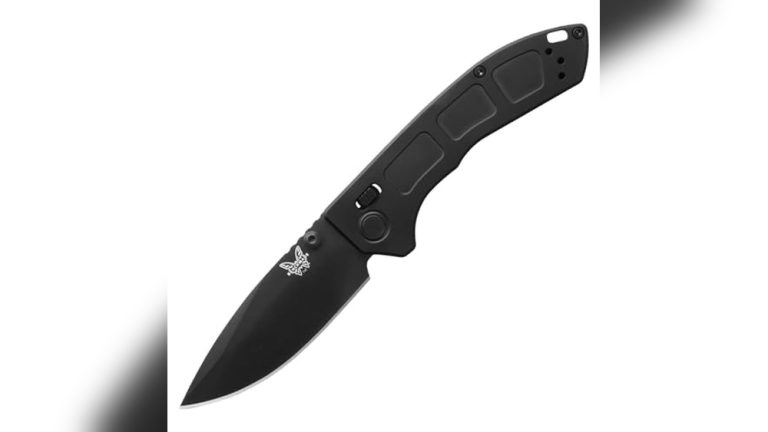
The Benchmade 940 has an aluminum handle. It feels solid and sturdy in the hand. The handle design provides a secure grip for various tasks.
The Bugout uses Grivory, a strong nylon-based material. It is lightweight and comfortable to hold. The textured surface improves grip, even when wet.
Weight Comparison
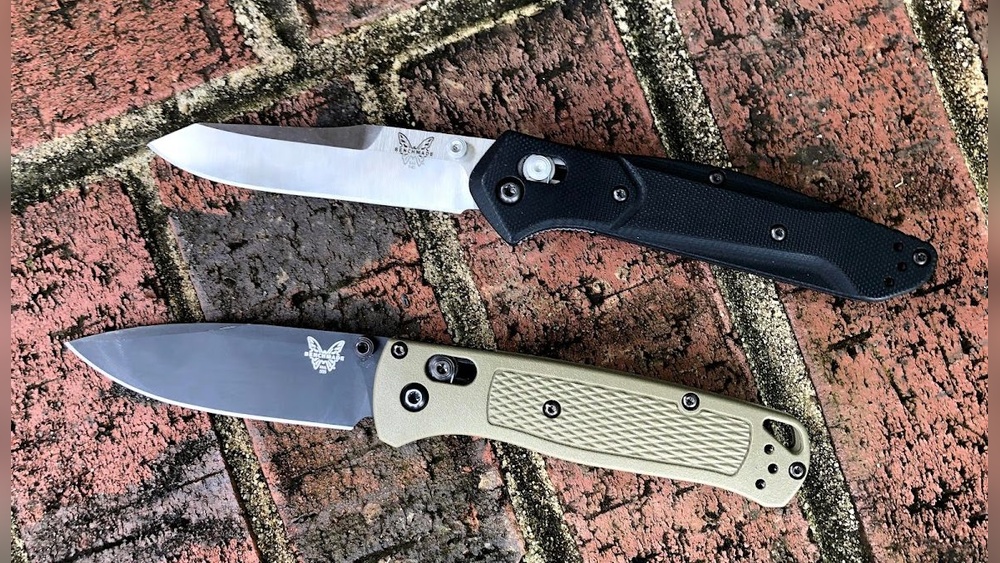
The Benchmade 940 weighs about 2.9 ounces. It balances well but is heavier than the Bugout.
The Bugout is very light, around 1.85 ounces. Its lightness makes it easy to carry all day.
Weight affects how the knife feels during use. The Bugout suits those who prefer a lighter tool. The 940 fits users who want a more solid feel.
Credit: www.benchreviews.com
Performance And Functionality
Performance and functionality define the real value of a pocket knife. Both the Benchmade 940 and Bugout offer strong features. Each model suits different tasks and users. Understanding their strengths helps choose the right knife.
Cutting Efficiency
The Benchmade 940 uses a longer blade. It excels at slicing and precision cuts. The blade shape allows smooth, clean cuts on various materials. The Bugout features a thinner blade. It cuts well but favors light tasks. Its edge sharpens quickly and holds well for everyday use.
Ergonomics And Comfort
The 940 has a larger handle that fits big hands well. It feels solid during use and offers good control. The Bugout is lighter and slimmer. It fits comfortably in small to medium hands. Its design reduces hand fatigue over long use. Both knives balance grip and comfort effectively.
Locking Mechanisms
The 940 uses Benchmade’s AXIS lock. It is strong and easy to operate with one hand. The Bugout also features the AXIS lock. It provides reliable blade security for daily tasks. Both locks prevent accidental closing and improve safety. They allow quick, smooth blade deployment every time.
Portability And Everyday Carry
Portability is key for a knife used every day. Both the Benchmade 940 and Bugout are designed to be easy to carry and quick to use. Their size and weight impact how comfortable they feel in your pocket. Small details like the clip and deployment method affect daily convenience. Let’s explore how these two knives stack up for everyday carry.
Pocket Clip And Carry Options
The Benchmade 940 features a sturdy, deep-carry pocket clip. It holds the knife securely and hides most of the handle. The Bugout uses a lighter, titanium clip that also sits deep in your pocket. Both clips allow tip-up carry, preferred by many users. The Bugout’s clip is slightly thinner, adding to its lightweight feel. Both knives offer right and left side carry options.
Size And Thickness
The 940 is larger and thicker than the Bugout. It measures about 7.9 inches open and 0.5 inches thick. The Bugout is smaller, around 7.1 inches open and just 0.22 inches thick. The thinner profile of the Bugout makes it easier to carry all day. The 940’s extra size can feel bulkier but offers a stronger grip. Both knives fold compactly but differ in pocket presence.
Ease Of Deployment
Both knives open quickly and smoothly. The 940 uses Benchmade’s AXIS lock and thumb studs for fast one-handed deployment. The Bugout also uses the AXIS lock but features larger thumb studs for easier access. The lighter blade of the Bugout helps it open with less effort. Both knives feel solid when opened and lock firmly in place. Quick deployment is reliable on both models.

Credit: www.youtube.com
Durability And Maintenance
Durability and maintenance are key factors when choosing between the Benchmade 940 and Bugout. Both knives are built to last, but their materials and design impact how they hold up over time. Proper care keeps these tools reliable and ready for use.
Blade Retention
Blade retention means how well the knife blade stays sharp and secure. The Benchmade 940 uses a strong locking mechanism that holds the blade firmly. The Bugout also offers solid blade retention, but its lighter design may feel less rigid for some users. Both knives keep their blades in place during regular tasks.
Corrosion Resistance
The Benchmade 940 features premium stainless steel that resists rust and stains. The Bugout uses a corrosion-resistant steel, making it great for outdoor use. Both knives handle moisture well, but the Bugout’s finish adds an extra layer of protection against corrosion.
Sharpening And Upkeep
Sharpening the Benchmade 940 is straightforward, thanks to its blade shape and steel type. The Bugout’s thin blade edge is easy to sharpen but needs careful handling to avoid damage. Regular cleaning and oiling keep both knives working smoothly and extend their lifespan.
Price And Value
Price and value play a big role when choosing between the Benchmade 940 and the Bugout. Both knives offer quality and durability. Each knife fits different budgets and uses. Understanding their cost and what you get helps make a smart choice.
Cost Comparison
The Benchmade 940 usually costs more than the Bugout. The 940 is priced around $190 to $220. The Bugout is more affordable, often between $120 and $160. Price difference reflects size and materials. The 940 has a larger blade and stronger steel. The Bugout is lighter and simpler. Both knives provide good value for their price.
Warranty And Support
Benchmade offers a strong warranty for both knives. The warranty covers defects in material and workmanship. It lasts for life, showing confidence in their products. Benchmade also has easy repair and sharpening services. Customer support helps solve problems quickly. This support adds value beyond the initial purchase.
Resale Value
The Benchmade 940 keeps its value well over time. It is popular among collectors and users. The Bugout also holds value but at a slightly lower rate. Both knives can be sold used for a good price. Condition and demand affect resale value. Regular maintenance helps keep the knife worth more.
User Preferences
User preferences play a big role in choosing between the Benchmade 940 and the Bugout. Both knives offer strong features, but different users favor one over the other. Personal style, needs, and comfort decide which knife fits best. Understanding these preferences helps in making the right choice.
Ideal Use Cases
The Benchmade 940 suits users who want a sturdy, everyday knife. It handles heavy tasks well. The 940 works great for outdoor work and tougher cutting jobs.
The Bugout is perfect for those who want a light and fast knife. It fits well for quick tasks and easy carry. Users who value weight and size often pick the Bugout.
Community Feedback
Many users praise the 940 for its solid feel and durability. It has a loyal fan base among collectors and outdoor workers. Some say it feels a bit heavy for daily carry.
The Bugout gets high marks for being slim and lightweight. People like how easy it is to carry all day. A few mention the blade is less strong for rough use.
Customization Options
The 940 offers many customization choices. Users can change scales, blades, and pocket clips. This appeals to those who want a personal touch.
The Bugout also has some customization options. It has different colors and handle materials. The choices are fewer but fit most users well.
Frequently Asked Questions
What Are The Main Differences Between Benchmade 940 And Bugout?
Benchmade 940 features a heavier, sturdier design, ideal for tough tasks. Bugout is lighter and slimmer, perfect for everyday carry and comfort. Both have high-quality blades but serve different user needs.
Which Knife Is Better For Everyday Carry, 940 Or Bugout?
Bugout is better for everyday carry due to its lightweight and slim profile. The 940 is heavier and bulkier, making it less convenient for daily use but excellent for heavy-duty tasks.
How Do Benchmade 940 And Bugout Compare In Blade Material?
Both knives use premium stainless steel. The 940 often uses CPM-S30V steel, known for durability. Bugout typically features CPM-S30V or CPM-S35VN, balancing sharpness and corrosion resistance effectively.
Which Knife Offers Better Ergonomics, Benchmade 940 Or Bugout?
Bugout offers superior ergonomics with its slim, lightweight handle designed for comfort. The 940 has a more substantial grip, better suited for heavy-duty use but less ergonomic for extended carry.
Conclusion
Both the Benchmade 940 and Bugout have strong points. The 940 offers a solid, sturdy feel. The Bugout is lighter and easier to carry. Your choice depends on what you need most. Do you want durability or lightness? Either knife performs well for everyday use.
Think about your daily tasks and preferences. Both models bring quality and reliability. You will find value in either choice. Simple, practical knives for daily carry.